Sunday, May 29, 2022

Teachers, online communities, and its negativity atmosphere

Community of Practice, Affinity spaces, Personal Learning Networks, Personal Learning Environments

Pros: Teachers can seek advice and even share their thoughts on educational practices. The online spaces can help teachers feel a sense of belonging.

However, I found that the atmosphere of a teachers' online community is filled with negativity atmosphere. Users (most of them are teachers) are sharing ideas and thoughts by asking questions or posting their experiences. However, there are too many negative postings. Why?

Evidence1: https://www.reddit.com/r/Teachers/comments/ng7k6k/starting_in_august/
  • I recently accepted a job teaching high school woodshop class and am doing a transition to teaching program. I've been excited to shift my career but am worried about all the negativity in the teaching field. Is it all that bad? I read so many posts here that describe how terrible the profession is. What are some positive aspects of the field? 
Evidence2: https://www.reddit.com/r/Teachers/comments/qx0j3t/is_it_really_this_bad/
  • I graduate with my masters next month and I accepted a position teaching a freshman level class at the same university next semester. Depending on how much I like it, I may make teaching a career. I don't expect to get my doctorate and keep teaching at the college level. So I would eventually go to K-12. But is it really as bad as yall make it out to be? This sub is very negative and I was wondering does this reflect reality or is this more of a place to just let off steam? Is the negativity of this sub the average experience for K-12 teachers?

Digital badges on LinkedIn learning


I wouldn't say I like the usage of educational digital badges since it tastes like too much behaviorism. Even though it might have the commonality with the ideas of behavioristic strategies, it has many implications for today's decentralized education.

In a networked world, we can see many people learn and teach through social networks. We even hear some news that schools, a representative term of traditional education, are losing its authorities due to MOOCs or online schools.

In this new trend, digital badges might be an excellent way to verify someone's skill levels or educational status. Look at this LinkedIn Learning. This is an exemplary case of digital badges.

For more info: https://intelliven.com/wp-content/uploads/2019/09/How-to-Display-Certificates-of-Completion-on-LinkedIn-Profiles-1.pdf


Saturday, May 28, 2022

PLN

 What is PLN?

    - PLNs are systems of interactions made up of people, spaces and tools that support learning and professional growth


PLN vs traditional professional development for teachers

    - There are many different types of PD for teachers: school-based mentoring program, district-based PD courses or workshops. These traditional PDs have been criticized for failing to account for the motivations and needs of teachers.


Why do teachers find online spaces?

    - To share professional knowledge, to overcome feelings of isolation, to receive emotional support, to seek advice in a more efficient manner.

Sunday, May 22, 2022

Queen bee of Hive Mind?

 When I first heard the idea of Hive Mind, I got to think of a queen bee. I don't want to go too far, but it is a question worth thinking about: Who controls bees' minds? Does a queen bee control the hive mind? 

In reality, the central role of the queen is just laying eggs (over 2000 a day). The queen bee does not control the bee colony. Then who? Workers or drones? Nope. Nobody control a bee colony. They are just doing the jobs given to them. Something that controls bee colonies and their hive mind is the collective mind having no formality but still exists. 

In our society, then who controls our hive mind? There are many influencers and manipulators, for sure. Still, from a broad perspective, the collective unconscious might be the thing that controls our hive mind. Worth watching some youtube videos about Carl Jung's idea.

It's only about preference: Being digital immigrants or natives

Some people say that digital natives have "updated brain," implying the change is permanent through their experiences in digital lives. The changes also include some assertions that digital natives are capable of multitasking. Of course, the evidence for these assumptions is scant. Many teachers' experiences show that young students, who are expected to be "digital natives," are not good at multitasking. They are not even doing well in digital environments. Ideas of digital immigrants and natives are "nice-looking" in terms of typology; however, we should say that it's only about preference.

Collective knowledge and Scratch.mit.edu

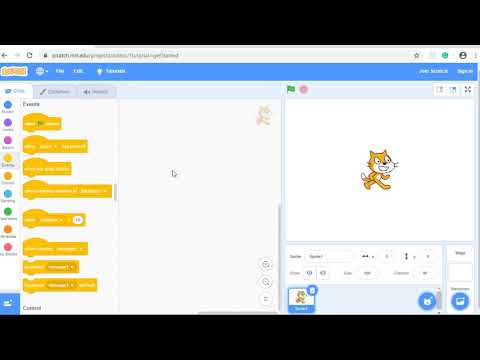
Scratch is one of the biggest and most popular online learning platforms to learn how to code. Based on a visual block-based programming approach, Scratch allows students to experience and learn how to code by lowering barriers for young and novice learners. 

Interesting features of Scratch are that learners can 1) upload and share their own projects, 2) remix and modify others' projects, and 3) redistribute modified projects. Anyone can search for projects if these are shared. There are also nested communities in the Scratch, similar to Facebook pages where people join and share their ideas on a specific topic. In Scratch, they say a nested community a "studio", and this is a space where learners having the same interests join and share their projects.

Sunday, May 15, 2022

Risks of homophily

Social network services provide us with options for choosing an online space where we want to be involved. For instance, a popular online community, Reddit, has tons of subReddits (e.g., teachers, mathematicians, carpenters, Tesla car owners, and so on). Of course, users can join the subReddit they are interested in and are actively participating in the Subreddits. This is very natural since we, as human beings, feel comfortable when we experience/interact with similar things we have already experienced. We tend to associate and bond with others who/which are similar to us/experiences, and this mutual attraction due to similarity is called "homophily." In online spaces, however, this homophily could disadvantage students in learning. Confirmation bias in information gathering might be one of the risks of homophily. Can we guarantee the information we are gathering on a particular online space is validated enough? 


Ethical concerns on Web 2.0+

Based on Axel Brun's article on Web2.0 and an interesting concept of the movement which is called being "produsage", I found that there might be some ethical concerns on Web 2.0+. Web 2.0 has more user-generated content and usability for end-users compared to its earlier version, Web 1.0. Web 3.0 provides more personalized usability and user-experience for web users by REQUESTING personal information. So someone might say that in the name of enjoying improved/personalized experiences, we are persuaded to sacrifice our privacy.

Wednesday, May 11, 2022

The first one

It has been around 15 years since I quit writing something on blogs.
So it would be okay to say that this posting might be the first one on my blog. Hope I get comfortable horsing around with this blog.

This Web 2.0 course reminds me that we are living in a real networked society. Everything-people, ideas and thoughts, and even things- is connected. Look forward to learning the NETWORKED and enjoying it.

Scratch

SCRATCH HELLO, SCRATCH Have you ever heard of Scratch? Scratch is a visual programming language that allows students to create their own int...