Monday, June 27, 2022

Reflections on NKA

The EME6414 course covers the networked knowledge activity (NKA) and encourages students to participate in the NKA. There are different components/stages in networked knowledge activities, allowing educators to build their own instruction based on the NKA frameworks.
Above the thorough theoretical ideas, I think the most important requirement to build a successful and meaningful NKA learning experience for students is on teachers who deliver the course: they should set an example by participating in NKA themselves, like what the instructor of the EME6414 course has shown so far.

Teacher and tech use

Social media platforms/tools have educational potential, however, many teachers still seem to be reluctant to use the tools and platforms in their classrooms. Let me think of the reasons briefly.
First, there are standardized tests for students and evaluation of teachers based on the test results, reminding teachers to keep sticking to less risky ways to meet the educational goals.
Second, using tech tools/platforms inherently requires teachers to be involved in more prep works, including more difficult classroom management in the activities.
Third, there is a lack of empirical evidence to justify themselves using the techy tools or platforms instead of using the traditional approaches.
Forth, there is a lack of resources and teaching-related experiences.  

Sunday, June 26, 2022

Bragging teachers

The use of social media, powerful tools having tons of potential, can discover and facilitate niches for educators and students. In some cases, the tools themselves create new opportunities and ideas for innovative/creative-minded educators, and in other cases, the tools are supplementary things in educational practices.
On the other hand, there is the other case that I have seen over the years was that tools themselves are used by some teachers as a means of manifesting their expertise in applying technology things, like a way of bragging about their competency as techy teachers.
This was neither of these and more harm than good, for sure.

Sunday, June 12, 2022

Teachers pay teachers

Whenever I play around in a teachers' subreddit, I encounter lots of posts including "teachers pay teachers." TpT is an online website where teachers can buy or sell educational resources. A thing that astonished me was that some teachers spend lots of money (more than $5,000 an academic year) to buy educational resources (e.g., course materials or teaching plans). 
This made me think following questions:
1) Is it illegal if someone shares paid TpT resources with other teachers?
2) Most teachers pay their money to buy resources TpT. Given that educational practices should be supported by collaborative efforts in school, do schools should provide funds for teachers? If it is, does it ethically correct?

Privacy issues caused by webcam

No one can deny that online education is a double-edged sword for learners and educators as well. Online learning environments possess lots of opportunities and affordances, including ubiquitous learning, and interactive learning. 
In terms of ethical issues recently reported in online learning environments is that privacy issues are caused by the use of webcams. In most cases, the use of a webcam is required to check if students participate in the online lecture or a way of interacting with others. However, webcams might reveal the private information of students (I believe that most students already experienced this).

open or free?

At first glance, the word free delivers a somewhat negative feeling by implying that the quality of the free educational resources is low. It is true at some point, but there are exceptions as well. OER (I interpret OER as a movement) is one of the examples disputing that free educational resources can be of high quality.

At some point, however, free does not always mean it is open. The more important thing is that the word open in OER implies the proactive participation of users to reuse/remix/redistribute to keep improving the quality of OERs.

Sunday, June 5, 2022

Movie Matrix and establishing credibility

The topic of "on the Internet, no one knows you're a dog." reminded me of the sci-fi movie Matrix, and Jean Baudrillard.

Jean Baudrillard, a French philosopher, claimed that the world we live in has replaced realities with symbols. He used the terms simulacra and simulation to explain these phenomena, and he even claimed that we now cannot distinguish between reality and simulation. The main idea of the sci-fi movie Matrix has roots in these philosophical ideas. The movie Matrix depicts a world where there are no clear borderlines between realities and the world of simulacre. Of course, our world is different from what the Matrix describes. But, we can still find meaningful implications for this topic: how we can establish credibility on the Internet?

Research on Tagging

I enjoyed reading this week's papers on tagging. Basically, the central purpose of tagging is indexing information.

Regarding cognition for instruction, tagging requires learners to use their high level of cognitive skills or meta-cognition. To add appropriate tags to something, they need to think of a whole picture of the contents. This is inherently related to reflection, evaluation, and meta-cognition, which explains why researchers pay attention to these tagging activities on instruction.

In online communities, tagging is appeared to have two major roles: indexing knowledge (making contents searchable) and shaping communities' identity (by forcing users' contents to be included in one of the categories they have). Of course, these two major roles are closely related.

As Dr. Dennen mentioned, it might be interesting to explore how the landscapes of online spaces are shaped differently by the tags they established. 

Given that Twitter is an account-oriented online environment, Reddit might be a better place to be researched since it is a more community-based online space. 

Epistemology, Bitcoin, and "No one knows you're a dog"

Yes. We don't know whether you are a dog on the Internet. We still want to know, but how?

This question is not a brand-new one, and it is inherently related to a question on epistemology: "Can we guarantee the thing we observe is real?"

With a long history in philosophy on epistemology (including Descartes and Kant), this question has added more value to today's networked world. Why? Since lots of things are veiled in the online environments compared to the past world.

I think there is no way to guarantee someone is an expert. We cannot meet, observe, or gauge someone and he/her skills.

Like what social constructivist supposes, I believe credibility and reliability should be understood as a social building process. The credibility and reliability of someone are not given, but rather something that we need to construct in a specific context, like what knowledge is socially constructed. I do not want to be a radicalist on this topic. Still, logically, this would be the only way to explain how we should establish credibility with someone and postings on online communities.

Interestingly, even though the networked world is confusing us to establish credibility/reliability, it can offer other possibilities: using networks to validate credibility like how Bitcoin works.


Scratch

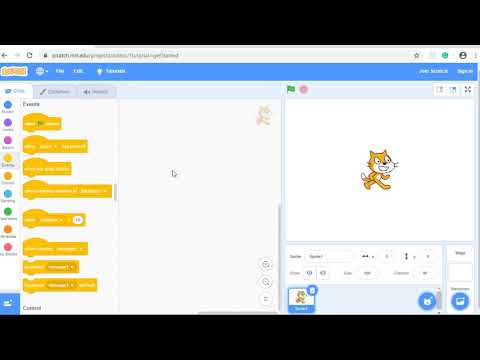
SCRATCH HELLO, SCRATCH Have you ever heard of Scratch? Scratch is a visual programming language that allows students to create their own int...